

For a home dojo, the best foam mat is a roll-out or folding tatami-style mat about 1 to 1.25 inches thick, because it gives a seamless floor with no seams under your feet during kata and kicks. Interlocking puzzle tiles are the cheaper, more flexible alternative if you need to cover an odd-shaped room or store the mats between classes. Pick thickness by what you do: about 1 inch for striking and kata, 1.5 to 2 inches if you also practice throws or falls.
Our top picks



As an Amazon Associate we earn from qualifying purchases at no extra cost to you.
Quick Comparison of Dojo Mat Types
| Pick | Best for | Key specs | Price range |
|---|---|---|---|
| Greatmats Tatami Roll Out Mat | Best overall for karate | 1.25 in thick, 6 ft wide, vinyl tatami top over crosslinked polyethylene foam, custom lengths | Premium |
| VEVOR roll-out mat | Best value coverage | Folding or roll-out vinyl-covered foam, sold in set sizes | Budget to mid |
| Meister FlexFloor roll-up mat | Best for a dedicated room | Roll-up foam mat with a firm top surface | Premium |
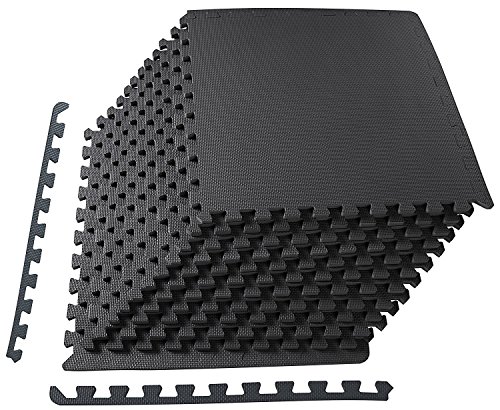
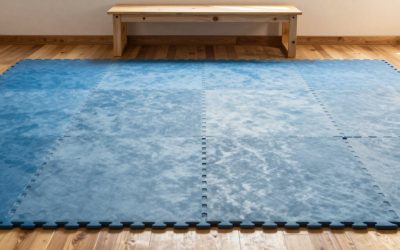
| 1 inch interlocking puzzle tiles | Best budget for kata and kihon | Foam tiles about 24 in square, edge borders included | Budget |
| Folding vinyl panel mats | Best portable option | Panels that fold in half or thirds, carry handles | Mid |
| 2 inch thick tumbling-style mat | Best for throws and falls | Higher shock absorption, firmer core | Mid to premium |
Best Overall: Greatmats Tatami Roll Out Mat
Greatmats lists its Tatami Roll Out Mat as 1.25 inches thick and 6 feet wide, with a vinyl top that has a tatami texture bonded to a crosslinked polyethylene foam core. The company positions it for striking arts including karate, taekwondo, Muay Thai and kickboxing, and rolls are cut to custom lengths. Colors are black, charcoal gray and royal blue.
It suits karate well because the texture gives grip for bare feet while the surface is smooth enough to slide a pivot in kata. The trade-offs are cost and lead time: Greatmats noted a handling time of several weeks, and the mat is heavy to move once rolled out, so it is best for a permanent room.
Best Value Coverage: VEVOR Roll-Out Mat
VEVOR sells roll-out and folding vinyl-covered foam mats in set sizes, and review sites often point to it as the lowest cost per square foot among roll-out options. That makes it a sensible fit for a garage or basement where you want a floor without spending on a commercial-grade product.
The compromise is the finish. Cheaper vinyl can scuff, and seams between pieces may separate if the floor is uneven. Lay it on a flat surface and check for gaps at the start of each season.
Best for a Dedicated Room: Meister FlexFloor Roll-Up Mat
Meister’s FlexFloor is a roll-up foam mat designed for training rooms where you want a single large surface. It stores by rolling, which is easier than stacking many tiles. This is a premium choice and is best when the space is permanent.
If you only occasionally train at home, it may cost more than you need. Confirm thickness and dimensions with the maker, because options vary by configuration.
Best Budget: 1 Inch Interlocking Puzzle Tiles
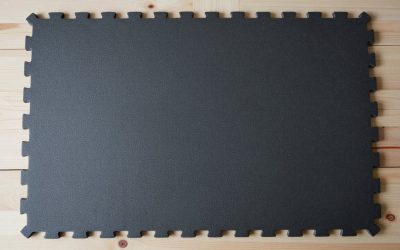
Puzzle tiles are the easiest entry point. Each tile is typically about 24 inches square, so a 10 by 10 foot area needs 25 tiles plus edge pieces. They fit awkward room shapes, and you can lift individual tiles when they wear. Karate practitioners who do mostly kata, kihon and light kumite can often use 1 inch tiles comfortably.
The main downside is seams. Over time tiles drift apart, creating small gaps that can catch a toe. Use a border piece and press the grid together before every session.
Best Portable: Folding Vinyl Panel Mats
Folding panels, usually fold-in-half or in thirds, have carry handles and Velcro edges. They suit a shared living room or a class that rents a hall. A panel is quick to set up but is also the type most likely to shift on smooth floors, so use a non-slip underlay or tape the outer edge down.
Best for Throws and Falls: 2 Inch Thick Mat
If your karate includes nage waza, breakfalls or Jiu-Jitsu-style takedowns, 2 inches gives noticeably more shock absorption. The cost is stability: thick foam makes fast pivots and deep stances less precise. Karate students who do mostly standing work do better on a thinner mat.
Thickness and Coverage: A Worked Example
Take a 12 by 12 foot practice area. That is 144 square feet. With 24 inch square tiles (4 sq ft each), you need 36 tiles, plus border pieces. A 6 foot wide roll-out requires two 12 foot lengths. Compare the cost per square foot, then add the price of tape or underlay if the floor is slick.
| Activity | Suggested thickness | Why |
|---|---|---|
| Kata and kihon only | 0.75 to 1 inch | Firm footing for stances and pivots |
| Kumite and bag work | 1 to 1.25 inches | Balances grip and joint cushioning |
| Throws and falls | 1.5 to 2 inches | Absorbs impact from landing |
| Children’s classes | 1 to 1.5 inches | Extra cushion for beginners |
How to Choose Foam Dojo Mats
- Measure your space. Add one extra row of mats around a kata line so a stance does not end on bare floor.
- Check the top surface. Textured tatami vinyl grips well; smooth vinyl slides and shows scuffs sooner.
- Consider the subfloor. Concrete needs a moisture barrier if the room is damp; carpet needs a firm underlay so mats do not wobble.
- Look at the core. Crosslinked polyethylene foam tends to hold its shape longer than basic EVA foam, which can compress with heavy use.
- Plan storage. Rolls need vertical space; tiles need a box; folding panels need a closet.
Care and Common Mistakes
Wipe the surface with a mild cleaner after sweaty classes, and avoid harsh solvents that damage vinyl. Do not drag furniture across the mat. Common errors include buying thick foam for a kata-only program, ignoring the border, and placing mats over uneven floors. Foam mats also off-gas a mild smell when new, so air the room for a day or two.
Frequently Asked Questions
How thick should karate mats be?
About 1 to 1.25 inches suits most karate training. Thinner mats feel firmer for stances; thicker mats help if you practice throws. Pick based on whether you land on the floor.
Are puzzle mats good for karate?
Yes, 1 inch puzzle tiles work for kata, kihon and light kumite. The seams can shift, so check them before each session and use border pieces.
How many mats do I need for a 10 by 10 foot room?
A 10 by 10 foot room is 100 square feet. With 24 inch tiles (4 square feet each), that is 25 tiles, and you may want extra for borders. A roll-out would need two cuts of about 10 feet.
Can I put dojo mats on carpet?
You can, but the carpet should be low pile and firm, or the mats will rock. A hard floor underneath gives the most stable result.
Do foam mats protect joints?
Foam adds cushioning, but it is not a medical device. If you have knee or back problems, talk to a physician or qualified instructor about your training surface.




Write Your Review
No reviews yet. Be the first to share your experience!