
Key takeaways
- The most common karate belt order runs white, yellow, orange, green, blue, purple, brown, and black, but there is no single worldwide standard.
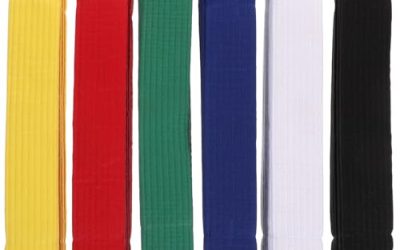
The most common karate belt order runs white, yellow, orange, green, blue, purple, brown, and black, but there is no single worldwide standard. Each style, federation, and school sets its own colors, number of ranks, and testing requirements, so your own dojo’s chart always wins over a general list.
This guide explains how the colored belt system developed, shows a typical ladder, describes what each stage generally means, and covers how to tie, wash, and replace a belt. It is for new students, parents of beginners, and anyone confused by seeing different colors at different schools.
Where the Colored Belt System Came From
Traditional karate used a simple divide between beginners and experts. Early students wore a white belt, and with years of training it supposedly darkened with sweat and wear until it turned black. Over the twentieth century, schools introduced colored belts to give students visible goals and to organize large classes.
That history helps explain why the system is not standardized. Some Okinawan and Japanese styles use only a few colors, while many schools abroad use a longer ladder with stripes to mark intermediate steps. Children’s classes often add extra stripes so younger students are rewarded more often.
A Typical Karate Belt Ladder
The list below describes a common sequence. Treat it as an example rather than a rulebook, and ask your instructor for the exact ladder your school uses.
| Stage | Common Color | General Focus |
|---|---|---|
| 1 | White | Etiquette, basic stances, first punches and blocks |
| 2 | Yellow | Consistency in basics, first kata |
| 3 | Orange | Better balance, simple combinations |
| 4 | Green | More kata, introduction to controlled sparring |
| 5 | Blue | Stronger timing, longer forms |
| 6 | Purple | Refinement, applications of kata |
| 7 | Brown | Advanced technique, leadership with juniors |
| 8 | Black | Mastery of fundamentals, start of deeper study |
What Each Stage Typically Means
Beginner Belts: White, Yellow, Orange
At the start, the focus is on learning how to bow, stand, move, and punch with control. Students learn the vocabulary of the dojo and begin to repeat simple patterns. Yellow and orange usually add a first kata and more careful footwork. Progress here is mostly about habits: showing up, listening, and practicing safely.
Intermediate Belts: Green, Blue, Purple
Middle ranks bring longer forms, more complex combinations, and structured sparring. Students begin to understand how techniques connect and how to apply them. Many schools use these ranks to introduce basic self-defense ideas, cardio conditioning, and mental discipline. This is also where many students feel a plateau, which is normal and usually a sign to refine details.
Advanced Belts: Brown and Black
Brown belts are close to black belt level and often assist in class. Their testing may include advanced kata, sparring, and written or oral parts. A black belt in most schools marks the start of deeper study rather than the end. Many styles then award degrees, called dan, for continued training and teaching.
Why Schools Differ
Different organizations choose different ladders. Some skip colors entirely. Others place a purple or red belt at different positions, or use a striped belt between full colors. Children’s programs may have as many as twelve or more steps, while adult classes in the same school may have fewer.
Grading criteria also differ. One dojo may require a minimum number of classes and months between tests. Another may focus on skill and attendance together. When you move schools, your rank may or may not transfer, and the new instructor may ask you to demonstrate your level.
Stripes, Tabs, and Half Steps
Many schools insert extra steps between full colors. A yellow belt with an orange stripe, for example, marks a student who has passed part of the next test but not all of it. Tape, tabs, or embroidered tips may be used instead of stripes. These half steps are especially common in children’s classes, where a full color change can take many months and a small reward keeps motivation up.
Adult programs often use fewer markers, and some schools hold gradings only a few times a year. If your school uses stripes, ask which skills each one stands for, such as a new kata, a set of basics, or a sparring requirement. Knowing the mapping helps you prepare instead of guessing what the instructor will ask.
Black Belt Degrees and Beyond
After first-degree black belt, many styles award further degrees, called dan, with longer waiting periods between each. Some organizations add titles for teaching ability, which are separate from the number of dan. Colors on the belt itself usually stay black, though a few federations add stripes or use red and white for very senior ranks.
Because requirements for higher degrees differ so widely, a number alone does not describe skill. A second-degree in one organization may involve different testing than a second-degree in another. If you ever change schools, bring your certificate and be ready to explain which style and federation issued it.
How Long Each Stage Usually Takes
Timelines depend on how often you train and how strict the school is. A beginner attending two classes a week might move from white to yellow in two to four months, while upper ranks often take longer because techniques get more complex and the gaps between tests widen. Some schools set minimum months at each rank, so even a fast learner waits for the clock.
Rather than comparing yourself to classmates, compare yourself to your own earlier video or notes. Steady attendance and honest practice beat rushing, and most instructors can tell when a student is ready to grade.
Belt Care and Tying Basics
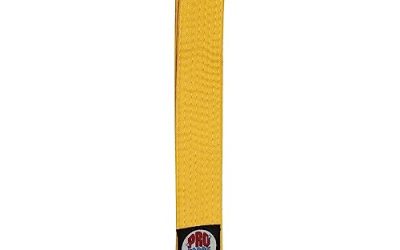
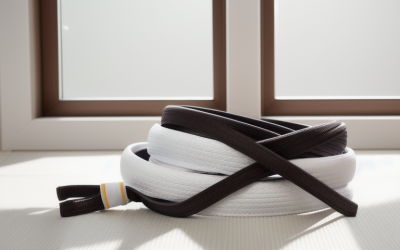
A karate belt is usually a long strip of cotton or cotton blend wrapped around the waist twice. The ends meet in front and tie in a square knot so both loops lie flat. Ends should hang at about equal length and not drag on the floor.
Some schools discourage washing a belt often, since tradition says it holds the student’s training history. Others encourage regular cleaning for hygiene. Follow your instructor’s guidance and the care label. If you wash a belt, use cold water and air dry to reduce shrinking and color bleed, particularly with dark colors that may stain a white uniform.
Before You Buy a Belt Checklist
- Ask your instructor which belt color is the next rank in your school.
- Measure your waist and choose a belt length that wraps twice with enough end length.
- Check the width and thickness your style prefers, since they vary.
- Confirm whether stripes are added by the school or sewn on by the student.
- Choose a material that holds a knot without slipping or fraying.
- Keep older belts if your school treats them as keepsakes.
Common Misunderstandings About Belt Ranks
- Believing the order is the same in every karate school.
- Assuming a black belt means expert; most instructors treat it as a serious beginning.
- Skipping fundamentals to chase the next color.
- Thinking a belt can be bought as a rank; promotions come from grading.
- Expecting rank to transfer automatically between styles or federations.
Related guides
- How To Size Karate Sparring Gloves And Shin Guards
- How To Practice Karate At Home Without A Partner
- Puzzle Foam Mats For Home Karate Practice
Frequently Asked Questions
How long does it take to earn a black belt in karate?
Many schools expect between three and six years of regular training, though some take longer. The timeline depends on attendance, age, school standards, and the testing schedule. Treat any quoted time as a general range rather than a promise.
Do all karate schools use the same belt colors?
No. Some schools use a short ladder of a few colors, while others use a long ladder with stripes. Always follow your own dojo’s chart, and ask the instructor if you are unsure about the next step.
What does the white belt represent?
White is generally the starting rank and represents a beginner with a fresh start. Many schools describe it as a symbol of openness to learning rather than a lack of ability.
Can I wear a different color belt if I train at home?
It is best to wear the belt that matches your rank at your school, including in 2026 grading sessions. Wearing a higher belt without earning it is considered disrespectful in most dojos.
More from Amazon
Programs that pair well with the guide above. Offers and eligibility are set by Amazon and may change.
Free shipping on eligible items, Prime Video and more. Eligible new members can start with a free trial.
Start a Prime free trialA Prime membership for ages 18-24 with a trial period. Eligibility is set by Amazon.
See Prime for Young AdultsAudiobooks and podcasts to listen to on the go. Eligible new members can start with a free trial.
Try Audible freeAd-free music streaming. Eligible new subscribers can start with a free trial.
Try Music Unlimited freeAs an Amazon Associate we earn from qualifying purchases.



Write Your Review
No reviews yet. Be the first to share your experience!