

For most adult karateka, a mid-weight, pre-shrunk cotton gi in a Japanese or tournament cut is the safest buy, while kata competitors should look at a WKF-approved model such as the Tokaido Kata Master, traditionalists at Okinawan-style makers like Shureido, and newcomers on a tight budget at entry-level lines from Century or Kwon. The right uniform depends on your style, how often you train, whether you compete, and how much you expect the fabric to shrink, so the sections below sort the main options by those needs.
Our top picks
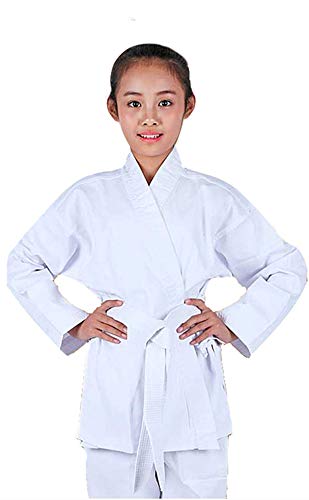
 POZTEV Karate Uniform for Kids & Adults
- Our karate gi is crafted from Premium Cotton-Poly…
- LIGHTWEIGHT WITH 360° MOBILITY: Our lightweight student karate…
- Our martial arts training uniforms undergo meticulous sewing…


As an Amazon Associate we earn from qualifying purchases at no extra cost to you.
Karate Uniforms for Adults at a Glance
| Brand and line | Best for | Key stated details | Limits |
|---|---|---|---|
| Tokaido Kata Master 12 oz | Kata competitors, WKF events | 100% cotton canvas, WKF approved, pre-shrunk, Japanese cut with very short sleeves and trousers; one retailer lists about 5 percent shrinkage | Short sleeves and legs look unusual on a regular gi wearer; sizing by centimetre height |
| Tokaido Kata Master Athletic | Athletic builds who want a stretch-friendly blend | Cotton and polyester blend (listed as 70/30), WKF approved, lower listed shrinkage of about 3 percent | Blend feels different from pure cotton; not the same garment as the 12 oz cotton version |
| Shureido (for example the TK-11) | Traditional Okinawan-style training | One reviewer lists about 1.8 kg, 100% cotton, loose cut, shorter sleeves and pants | Runs large; reviewers note a long break-in and a premium tier cost |
| Seishin Premium | Hot dojos, comfort and ventilation | Reviewer lists about 1.3 to 1.4 kg, natural cotton, semi-slim Japanese cut | Reviewer saw visible shape change after roughly ten washes |
| Century karate uniforms | Beginners, schools, budget buyers | Light, medium and heavyweight options, cotton and polyester blends, jackets cut shorter than traditional Japanese gis | Heavier weights are reported to shrink noticeably; some forum users avoid the brand |
| Kwon traditional, kumite and kata lines | Tournament-minded students | Brushed cotton, WKF-approved tournament models | Weights and shrinkage figures are less documented |
| Jukado Juka and Dragon | Students wanting a heavier canvas feel | Juka is described as 12 to 14 oz brushed canvas, Dragon as entry level, with a women-specific line | Less common in some regions |
What Matters When Choosing an Adult Karate Gi
Karate uniforms look similar from across the room, yet they differ in four practical ways: fabric, weight, cut, and finishing. Understanding those four points does more for your buying decision than any brand ranking.
Fabric and Weight
Most traditional karate gi are cotton or cotton canvas. Weight is usually quoted in ounces per square yard, or in total garment kilograms. Reviewers commonly separate uniforms into a lightweight group suited to beginners and warm rooms, a mid-weight group around 8 to 10 ounces suited to regular classes, and a heavy group of 12 ounces and above that is prized for the crisp snap when a technique finishes. A heavy canvas holds its shape and looks sharp in kata, but it is warmer, stiffer when new and slower to dry. A lighter gi breathes better and is gentler on the skin while you are still learning basic movement.
Blends add polyester to reduce shrinkage and wrinkling. Tokaido lists its Kata Master Athletic as a cotton and polyester blend with a lower shrinkage rate than the pure cotton version, which is the main reason an athlete who washes frequently might prefer it.
Cut and Style
Cut is where lineage shows. The Japanese cut, used by Tokaido and Seishin, features sleeves and trousers that stop short of the wrist and ankle, with a longer jacket skirt. The Okinawan style used by Shureido is described by reviewers as looser, with shorter sleeves and pants again and room to move. American-oriented brands such as Century are noted for jackets that are shorter than the traditional Japanese versions. Tournament cuts, found at Kwon and Kamikazi, are tailored so the jacket does not ride up during fast kumite or high kicks.
None of these is objectively better. If your instructor asks for a specific look, follow the dojo requirement first. If not, pick the cut that feels least restrictive when you stand in kiba dachi and throw a full roundhouse kick.
Sizing and Shrinkage
Many Japanese-made gi are sized by height in centimetres rather than by a generic small, medium and large. The Kata Master range, for instance, runs from 140 cm up to 210 cm, with intermediate sizes from 160 cm. Retailers pair these with height guides, such as the 180 cm size being listed for people up to about 5 feet 9 inches. One reviewer advises going by the centimetre chart and ignoring the older number system.
Shrinkage guidance varies. Tokaido describes a pre-shrunk process and one distributor lists roughly 5 percent. A UK reviewer 183 cm tall and 89 kg who bought the 185 cm size reported a good fit and minimal shrinkage after a cool wash. Reviewers of Shureido note the cut runs large, while those writing about Tokaido’s slim cut suggest sizing up when you are between sizes. Always compare your measurements with the maker’s chart, and remember that sleeves and trousers on these cuts are meant to look short.
Stitching and Finishing
Look for reinforced seams on the shoulders, underarms and crotch, a double-layered lapel, and a sturdy waistband, since those are where daily training exposes weakness. Some makers add underarm gussets, which prevent the jacket from lifting when you raise your arms. Meijin is cited for gussets and cotton gauze waistbands, and Tokaido markets its Ultimate Sound Technology for the crisp snap sound some students want.
Options by Budget Tier
Budget
Entry-level lines from Century and Kwon are the usual starting point for adult beginners. They allow you to find out whether the art is for you without a large outlay. The trade-offs reported by reviewers are shorter jackets, heavier fabrics that can shrink and a less refined finish. Wash cold and hang dry, and treat your first gi as a learning tool.
Mid-Range
This is where most dedicated students end up. Seishin’s lighter premium gi offers breathable natural cotton, and mid-weight Tokaido lines offer a slim Japanese cut with a name that reviewers say has long been associated with karate. The Karate Blog places Tokaido at the top of its brand list, while forum users have also reported some recent quality-control inconsistency, so inspect the stitching when it arrives.
Premium
Premium means heavyweight cotton, hand-finished details and a longer break-in. Shureido sits here, with a reviewer describing a relaxed Okinawan cut that holds its shape after washing. The Kata Master 12 oz belongs in this tier for competitors who need WKF approval. A premium gi rewards the student who trains several times a week and wants crisp lines in kata.
Pick X If: Decision Table
| If you are | Pick | Why |
|---|---|---|
| A first-time adult student | Century or Kwon entry-level gi | Low commitment, easy to find, forgiving fit |
| Competing in WKF kata | Tokaido Kata Master 12 oz | WKF approved, pre-shrunk cotton canvas, Japanese cut |
| Competing in kumite with a stretch preference | Tokaido Kata Master Athletic or a Kwon tournament model | Blend fabric and tournament tailoring |
| Training Okinawan styles | Shureido | Loose cut with shorter sleeves and pants |
| Training in a warm room | Seishin Premium | Lighter cotton at roughly 1.3 to 1.4 kg per reviewer |
| Wanting a heavy, crisp feel | Jukado Juka or a 12 oz Tokaido | Heavy brushed canvas and strong snap |
| Tall or long-limbed | A Japanese-cut gi with an intermediate size | Intermediate sizes exist from 160 cm in some ranges |
Care Tips That Extend a Gi’s Life
Follow the maker’s washing label first. General advice repeated across the sources: wash in cold or cool water, avoid high-heat tumble drying, close the drawstring and fasten the jacket before washing, and hang the uniform to dry. A pre-shrunk gi still moves a little, so allow for the small percentage the maker lists. Rinse sweat out soon after training; cotton left damp in a bag develops odour and wears faster. Keep a white gi away from coloured laundry, particularly new dark belts that can bleed.
Alternatives to Consider
- Toyo and Mugen: Toyo is described as using shrink-resistant cotton with reinforced stitching, and Mugen as roughly 12 ounce cotton with tournament-oriented cuts similar to Toyo. Both sit between budget and premium.
- Adidas karate uniform: A lightweight 45 percent polyester and 55 percent cotton blend with an elastic waist. It suits students who prefer a modern look and quick drying over traditional feel.
- Kamikazi and Tokon: A German brand with style-specific lines for Shito-Ryu and Wado-Ryu, a useful option if your style has particular uniform expectations.
- A second, lighter gi: Many students keep a heavy competition gi and a cheaper lighter one for daily classes, which spares the expensive uniform from constant washing.
Common Buying Mistakes
The most frequent error is buying by generic size letters instead of height in centimetres. The second is choosing the heaviest canvas immediately; a stiff, hot uniform is miserable for a beginner. A third is ignoring the dojo’s rules about logos, colour and belts. Some competitions and some schools require plain, unbranded uniforms, which is why plain Japan Style versions of tournament gi exist. Finally, do not assume every high price brings a better fit for your body; try different cuts if you can before buying a premium model.
Frequently Asked Questions
What weight of karate gi is best for adults?
Beginners and students in warm rooms usually do well with light to mid-weight cotton. Experienced students and competitors often move to 12 ounce canvas for the crisp feel in kata. The right weight is the one you can train in comfortably for a full class.
Do karate uniforms shrink?
Cotton does shrink, especially heavier unwashed fabric. Tokaido describes its Kata Master as pre-shrunk, and one distributor lists roughly 5 percent shrinkage, while the Athletic blend is listed at around 3 percent. Reviewers note that heavyweight Century gis can shrink a lot, so follow the washing label and consider sizing guidance from the maker.
What does WKF approved mean?
It means the uniform meets the World Karate Federation’s equipment rules for official competition. Models such as the Tokaido Kata Master and Kwon tournament gi are described this way. If you plan to enter WKF-sanctioned events, confirm the exact requirements with your federation before you buy.
Why are the sleeves and pants so short on a Japanese cut gi?
That is the intended design. The Japanese and Okinawan cuts keep sleeves and trousers short so they do not obstruct fast movements, and the jacket skirt is longer. If you prefer fuller coverage, look at American-oriented cuts, though Century jackets are noted for being shorter overall.
Can I use a judo or BJJ gi for karate?
Those uniforms are built for gripping and are usually heavier in the jacket with thicker collars. Karate gi are cut for striking and kicking. A grappling gi may be allowed at casual classes, but follow your instructor’s guidance and the dojo’s uniform rule.
How do I wash a karate gi without damaging it?
Use cool or cold water, a mild detergent and no bleach, fasten the jacket, and hang the uniform to dry. Avoid high-heat dryers that can accelerate shrinkage. Always read the maker’s care label first, since blends and pure cotton can have different instructions.


Write Your Review
No reviews yet. Be the first to share your experience!