

Key takeaways
- Dry them after every session. Open the cuff, pull the lining out, and let the gloves air for several hours. Do not leave them in a closed bag overnight.
- Use wraps. Hand wraps absorb sweat that would otherwise soak the lining and speed up odor, and they protect the small bones of the hand.
- Avoid direct heat. Radiators and parked cars warp the foam and dry out leather.
- Rotate pairs. If you train daily, two pairs let each one dry for 24 hours.
- Watch the stitching. The thumb area and the strap anchor are the first points to fail. Replace gloves when stitching begins to open.
The best MMA gloves for most people in 2026 are the Hayabusa T3 for wrist support, the Fairtex FGV18 for sparring protection, and the Venum Challenger for value. Which one is right depends on one question first: are you buying for fights, for sparring, or for bag and pad work? The answer changes the glove weight, the foam, and the closure you should look for.
MMA gloves are open-fingered so you can grip, but that open palm also means the padding has to do more work protecting your hand and your partner’s face. Competition gloves under most commission and promotion rules are 4 oz with thin knuckle padding, while sparring gloves run 7 oz and up. Training gloves for bags and mitts sit anywhere in between. This guide compares seven real models from Hayabusa, Venum, Fairtex and UFC, then shows how to size, choose and maintain them so the pair you buy lasts.
Our top picks


As an Amazon Associate we earn from qualifying purchases at no extra cost to you.
Quick Comparison of the Seven Picks
| Pick | Best for | Weight class | Closure | Shell and foam |
|---|---|---|---|---|
| Hayabusa T3 (4 oz) | Wrist support, amateur fights | 4 oz | Dual-X strap | Multi-layer foam, thermal lining |
| Hayabusa T3 Sparring | Sparring with a curved fit | 7 oz class | Dual-X strap | Delta EG foam, microfiber vegan leather |
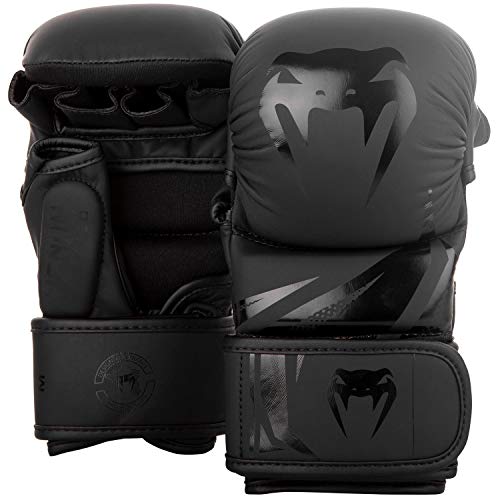
| Venum Challenger | Budget competition-style glove | 4 oz | Double hook-and-loop | PU leather |
| Venum Undisputed 2.0 | Premium feel, striking work | 4 oz class | Single hook-and-loop | Nappa leather, layered foam |
| Fairtex FGV18 | Sparring, clinch work | 7 oz class | Wide double-stitched strap | Leather, mesh lining |
| Fairtex BGV1 | Hand-made Thai build, tight fit | 4 oz class | Hook-and-loop | Fairtex foam |
| UFC Training Gloves | General gym training | 4 oz class | Secure-fit closure | EVA93 foam, Rapid-DRI lining |
Specs follow the manufacturers’ product pages and major retailer listings. Always confirm the exact size chart before ordering, because the same brand can fit differently from one model to the next, and some retailers describe materials slightly differently from the brand itself.
Best Overall: Hayabusa T3 (4 oz)
The Hayabusa T3 is the glove that many coaches name first when the question is wrist security. It uses a Dual-X closure, two crossing straps that pull the wrist into a locked position instead of relying on a single wrap, along with a no-shift palm design and multi-layer foam. A thermal lining helps the glove stay comfortable when it warms up during long rounds, and the palm panel is shaped so that the foam does not migrate toward the fingers after a few weeks of use.
Who it suits: amateur fighters, striking-focused MMA students, and anyone who has felt a wrist bend on a heavy bag. The straps stop the glove from rotating, and that matters when you are throwing hooks at speed or catching a kick on the forearm.
Pros: strong wrist lock, competition-style weight, comfortable lining. Cons: it sits at the premium end for a 4 oz glove, and the fit is precise. If you wear thick hand wraps, try the glove on over your wraps because the closed shape leaves little spare room.
Best for Sparring Comfort: Hayabusa T3 Sparring Model
Hayabusa also offers the T3 in a sparring configuration built on Delta EG foam with a microfiber vegan-leather shell and a pre-formed curve. The curve matters more than most buyers expect. A glove that rests in a half-closed shape keeps your fingers in a natural position, which reduces forearm fatigue across a long sparring session. The T3 LX variant moves to Italian leather, listed as a 7 oz hybrid with the same Dual-X strap, for people who prefer a leather feel and are willing to pay more for it.
Who it suits: students who spar two or three times a week and want a glove that protects their partners as much as their own knuckles.
Pros: curved shape, protective foam, strong strap system. Cons: the larger foam volume makes it less ideal for grappling-heavy drills, where a bulky glove snags on clothing and limbs.
Best Budget Competition-Style Glove: Venum Challenger
The Venum Challenger is a 4 oz glove with a PU leather shell and a double hook-and-loop closure. It tends to feel stiff when new and needs a short break-in period of several sessions on the heavy bag. Some buyers report it runs on the small side, so people with wider hands should choose the next size up. The Challenger 2.0 uses synthetic leather and is not made in Thailand, so it is better viewed as a value glove than a long-term investment.
Who it suits: beginners who want one pair of gloves that works on the bag and in controlled partner drills without a large spend.
Pros: affordable, simple closure, widely stocked sizes. Cons: the padding is thinner than a true sparring glove, so do not use it for hard sparring, and the stitching is the first place wear shows after months of daily use.
Best Premium Feel: Venum Undisputed 2.0
The Venum Undisputed 2.0 uses nappa leather, layered foam and a single hook-and-loop strap. Nappa is a soft, supple leather that conforms to the hand quickly, so the glove feels broken-in sooner than many synthetic options. Layered foam absorbs the shock of impact across multiple densities instead of relying on one slab, which spreads force across the back of the hand.
Who it suits: striking-focused trainees who want a more refined finish and a comfortable fit from the first week.
Pros: soft leather, quick break-in, premium look. Cons: a single strap offers less wrist stability than the Hayabusa Dual-X system, and a nappa shell needs more care to avoid cracking if it is left in a hot bag.
Best for Sparring and Clinch Work: Fairtex FGV18
The Fairtex FGV18 is the glove many coaches choose when sparring protection is the priority. It is hand-made in Thailand with a double-stitched strap and mesh lining that vents heat from the palm. Retailer descriptions differ on whether the shell is full-grain leather or a synthetic blend, so confirm the material on the exact listing you are buying from.
Who it suits: students who clinch, work knees and elbows in Muay Thai-style classes, and need a glove with generous protection around the knuckles and wrist.
Pros: protective padding, reinforced strap, long reputation in striking gyms. Cons: the size makes it less comfortable for grappling exchanges, and it lacks the open-palm flexibility of a slimmer MMA glove.
Best Hand-Made Thai Build: Fairtex BGV1
The Fairtex BGV1 is another Thailand-made glove, known for a tight fit and Fairtex’s own foam. It sits closer to a traditional striking glove with MMA-style open fingers. Because it is built snug, it suits people with narrower hands who dislike having room to move inside the glove.
Who it suits: kickboxers and Muay Thai practitioners adding MMA drills, and buyers who value hand craftsmanship.
Pros: tight, secure fit, quality construction. Cons: a snug shape can feel restrictive over thick wraps, and sizing up is not always an option within the same model.
Best Entry Gym Glove: UFC Training Gloves
UFC-branded training gloves use EVA93 foam, a secure-fit closure and Rapid-DRI lining. They suit general gym training for bags and mitts at a modest tier and are widely available in multiple sizes.
Who it suits: new students who attend a fitness-focused class and do not plan to spar hard. The moisture-wicking lining helps with odor control in shared lockers.
Pros: easy to find, comfortable out of the box. Cons: these are training gloves, not sanctioned competition gloves, so check your event’s rules before using them in a bout, and the foam is not designed for hard sparring.
How to Choose MMA Gloves
Match the glove weight to the job
Competition gloves are 4 oz with less than one inch of knuckle padding under UFC and IMMAF-style standards. Sparring gloves are usually 7 oz and up so your partner is protected. Bag work gloves generally land between 4 oz and 7 oz. Many gyms ask students to bring both a 7 oz sparring pair and a lighter training pair, and a few ask for 10 oz or more in hard sparring rounds.
Check the wrist system
Wrist injuries come from wobble. Dual-strap systems like the Hayabusa Dual-X and wide single straps like the Fairtex design lock the wrist in line. Single hook-and-loop closures work but allow slightly more play, so use quality wraps to make up the difference.
Decide on materials
Genuine leather lasts longer and molds to your hand but needs care. Microfiber and PU leather resist sweat well and cost less, but they often break down at the stitching sooner. For a glove you will use three times a week, plan on roughly a year of regular use before the foam compresses noticeably.
Sizing worked example
Measure the circumference of your dominant hand just behind the knuckles with a flexible tape. As a typical guide, 7 to 7.5 inches maps to small, 7.5 to 8.5 inches to medium, 8.5 to 9.5 inches to large, and anything above that to extra large. If you wear wraps, size up when you land between ranges. For example, a hand measuring 8.3 inches fits a medium by the chart, but if you wrap with a long 180-inch wrap, a large will usually feel less cramped and close more cleanly.
Decision Matrix by Situation
| Your situation | Choose | Why |
|---|---|---|
| New to MMA, one pair only | Venum Challenger or UFC Training Gloves | Lower cost, forgiving for bag work |
| Spars regularly | Fairtex FGV18 or Hayabusa T3 Sparring | Extra padding for partner safety |
| Amateur fighter | Hayabusa T3 (4 oz) | Wrist lock plus competition weight |
| Muay Thai crossover | Fairtex BGV1 or FGV18 | Thai-built, clinch-friendly |
| Prefers soft leather | Venum Undisputed 2.0 | Nappa break-in speed |
Cost Per Session Calculation
Think of gloves as a cost spread across training sessions. If a mid-range glove lasts roughly 12 months and you train three times a week, that is about 150 sessions. A glove that costs twice as much but lasts 24 months works out to about 300 sessions, so the cost per session ends up similar. The more important number is how many hard rounds the foam survives. Foam fatigue is real, and a glove that feels flat after 18 months is no longer protecting your hand or your partner properly, no matter how good the leather still looks.
For a student who only attends a weekly class, the math flips. A single pair of mid-range gloves can last two years or more, which makes a premium pair easier to justify on comfort alone.
Care and Durability Realities
- Dry them after every session. Open the cuff, pull the lining out, and let the gloves air for several hours. Do not leave them in a closed bag overnight.
- Use wraps. Hand wraps absorb sweat that would otherwise soak the lining and speed up odor, and they protect the small bones of the hand.
- Avoid direct heat. Radiators and parked cars warp the foam and dry out leather.
- Rotate pairs. If you train daily, two pairs let each one dry for 24 hours.
- Watch the stitching. The thumb area and the strap anchor are the first points to fail. Replace gloves when stitching begins to open.
Common mistakes include buying a competition glove for sparring, ignoring the sizing chart, and wearing gloves loose over wraps that slip. A deodorizing spray or a cedar insert helps, but nothing replaces airing the glove out.
Wraps, Break-In and Fit Checks Before You Commit
A glove only protects you if the hand inside it is stable, so the wrap matters as much as the brand. Most MMA students wrap with a 120 to 180 inch cloth wrap, running it around the wrist first for support, then across the palm and knuckles, and finally between the fingers to lock everything in place. Gel-lined quick wraps are faster to put on, but they cannot match a hand-tied wrap for wrist stability, which is why serious fighters still use cloth.
Use this short fit check when a new pair arrives:
- Wrap both hands the way you normally train. A glove that only fits over a thin wrap will feel wrong the first time you tie a proper one.
- Make a full fist inside the glove. Your fingertips should reach the palm pad without being crushed, and the thumb should rest naturally against the side of the index finger.
- Close the strap and rotate your wrist. If the glove twists independently of your hand, the cuff is too loose or the size is wrong.
- Hit a bag for three easy rounds. Hot spots on the knuckles or a pinched thumb show up quickly, and most retailers will still accept a return on clean, unused gloves.
- Re-check after a week. Foam settles, so a glove that felt perfect on day one can feel slightly looser by the second week. If the strap now sits at its last position, the glove is too large.
Break-in is different for each material. Leather and nappa gloves soften within roughly five to eight sessions of bag work. Synthetic shells like PU leather soften less but stay consistent, so what you feel on day one is close to what you get at month six. If a glove is painful to close, do not try to stretch it by force; exchange it for the next size instead.
Common Buying Mistakes to Avoid
- Buying one pair for everything. A 4 oz competition glove is not a sparring glove, and a bulky 7 oz glove is clumsy for grappling drills. If your budget allows only one pair, choose the weight that matches the activity you do most often.
- Trusting the label size alone. A medium from one brand can feel like a large from another. Use the hand circumference chart on the brand’s own page.
- Ignoring the palm. Open-finger gloves put your palm in direct contact with a bag, a pad, or a training partner’s gear. A well-shaped palm panel prevents blisters during long grappling rounds.
- Skipping wraps to save time. Gloves with a strong strap system still do not replace wraps; the wrap keeps the knuckles aligned.
- Keeping worn gloves too long. When the foam above the knuckles feels thin or lumpy, retire the pair to bag duty only, then replace it.
Frequently Asked Questions
What oz MMA gloves do I need for sparring?
Most gyms ask for 7 oz gloves or heavier for sparring, and some require 10 oz or more for hard rounds. Check your gym’s rule, because 4 oz competition gloves are not intended for sparring. Heavier gloves protect both people.
Can I use MMA gloves for heavy bag work?
Yes, but 4 oz gloves offer limited protection for heavy bags, especially for wrists and knuckles. Many people use 7 oz gloves or dedicated bag gloves for high volume. Wraps are important either way.
How should MMA gloves fit?
They should feel snug without cutting circulation, with your fingertips close to the end of the glove and the thumb comfortably free. Your wrist should not rotate inside the cuff when the strap is closed. Try them on over your wraps if you can.
Are MMA gloves allowed in boxing or Muay Thai class?
Some gyms allow them for pad and bag drills, but boxing and Muay Thai sparring usually requires a closed boxing glove. Ask your coach before bringing open-finger gloves to a striking class.
How often should I replace MMA gloves?
Plan on replacing them roughly every 12 to 18 months with regular training. Replace sooner if the foam feels compressed, the stitching opens, or the wrist strap no longer holds.


Write Your Review
No reviews yet. Be the first to share your experience!