

Key takeaways
- You can practice karate at home without a partner by splitting your session into four solo drills: basics (kihon), forms (kata), imaginary sparring.
You can practice karate at home without a partner by splitting your session into four solo drills: basics (kihon), forms (kata), imaginary sparring, and conditioning. Each one trains a different skill, and together they cover most of what a partner would give you except timing against a live opponent.
This guide is for students who miss class days, adults training around a work schedule, and parents of young karateka who want a structure for the week. It assumes you already know a few techniques from a dojo or a good class video. If you are brand new, ask your instructor which techniques are safe to repeat alone before you build a routine.
Why Solo Practice Works Better Than Most People Expect
Partner drills teach distance and reaction, but they also leave you waiting, resetting, and correcting someone else. Solo work removes those gaps. A single focused twenty-minute block can include more clean repetitions of a stance or kick than a full group class, and every repetition is yours to correct.
The trade-off is feedback. Nobody is there to say your hip is open or your back foot is lifting. That means solo practice needs a mirror, a camera, or a written checklist so you can catch faults yourself. Slow, deliberate movement beats fast sloppy movement almost every time, because speed built on a flawed pattern simply locks the flaw in.
Build a Solo Session in Four Parts
Part One: Warm Up and Basics
Spend the first five to eight minutes on joint circles, light jogging in place, leg swings, and gentle stretching. Then move to kihon: front stance, back stance, and horse stance transitions, followed by straight punches, blocks, and a small set of kicks. Count your reps and pick two techniques per session to examine closely rather than rushing through all of them.
Work in front of a mirror when you can. Watch your guard hand, your shoulder line, and where your heel lands after each kick. If you have no mirror, record a short clip from the side and compare it to the way your instructor performs the same movement.
Part Two: Kata with a Purpose
Kata is the best partner-free tool in karate because it is already designed to be performed alone. Run your current form slowly first, then at full speed, then slowly again with attention to one detail such as eye line, breathing, or the end position of each stance.
Think about what each movement is meant to do. Picturing a grab, a punch, or a push at every turn gives your kata direction and keeps it from becoming a memorized dance. If you know the application your dojo teaches, rehearse it mentally at each step.
Part Three: Imaginary Sparring
Shadow sparring, sometimes called kumite visualization, means moving as if an opponent is in front of you. Set a timer for rounds of two minutes with short rests. Practice stepping in, angling off, blocking an imaginary attack, and returning to your guard. Keep it light enough that you can stop on balance after every combination.
Give your imaginary opponent a personality. One round they are taller and keep distance; the next they crowd you and throw short punches. Changing the scenario trains decision making, which is the very thing a partner normally supplies.
Part Four: Conditioning and Cool Down
Finish with strength and mobility work that supports your technique: slow squats, calf raises, core holds, and hip flexibility. Karate kicks rely heavily on balance and hip range, so slow leg raises and gentle splits-style stretches earn their place. Close with five minutes of easy stretching and slow breathing.
A Sample Weekly Plan
The table below shows one way to spread solo practice across a week. Treat it as a template and shift days around your class schedule.
| Day | Main Focus | Approximate Time | What to Check |
|---|---|---|---|
| Monday | Basics and stances | 25 minutes | Stance width, knee alignment, guard hand |
| Tuesday | Kata, slow then fast | 20 minutes | Balance at end of each move, breathing |
| Wednesday | Rest or light stretching | 10 minutes | Sore spots, hip and ankle mobility |
| Thursday | Imaginary sparring rounds | 20 minutes | Footwork, returning to guard |
| Friday | Kicks and flexibility | 25 minutes | Chamber height, standing foot, hips |
| Saturday | Full mixed session | 35 minutes | Pacing, focus, clean finish |
| Sunday | Rest | 0 minutes | Recovery and sleep |
Before You Start Checklist
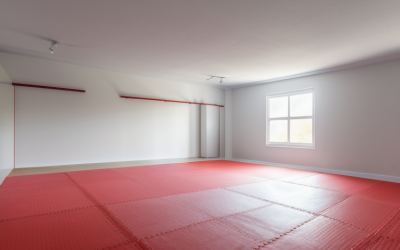
- Clear a floor area where you can extend both arms and kick without touching furniture.
- Wear clothing that allows free movement and train barefoot or in socks only if the surface is not slippery.
- Keep water nearby and stop if you feel pain, dizziness, or sharp joint discomfort.
- Choose two details to improve this session and write them on a sticky note.
- Set a timer so you finish while you are still focused, not exhausted.
- Check with a doctor if you have an injury or health condition that could affect training.
Ways to Make Solo Practice Feel Less Lonely
Motivation fades fastest when practice feels like a chore. Keep a short log with the date, what you drilled, and one thing that improved. After a month, that log shows progress you would otherwise miss. Some students pair the log with a short phone video each week, which makes small gains visible.
You can also add structure by borrowing the rhythm of a class. Begin with a bow, run a warm up, work the same order every time, and end with a bow. That ritual tells your brain that this is training, not exercise, and it makes it easier to show up on tired days.
Finally, bring your questions to class. Solo practice raises specific problems, such as a kick that never quite reaches height or a stance that feels unstable. Instructors can fix those faster when you describe exactly what you noticed during home sessions.
Use Simple Household Aids Instead of a Partner
A partner provides targets, resistance, and feedback. You can replace each of those with something ordinary. A strip of tape on the wall at head height gives your kicks a target line. A chair back or doorframe offers light support for balance drills and slow high kicks. A hand-held phone on a shelf records your angle so you can review your hips, shoulders, and head position afterward.
For resistance, slow motion works surprisingly well. Perform a front kick over five full seconds, hold the chamber, and return the same way. That tension builds control in the standing leg and hips without any extra gear. You can also practice against an imaginary pushing partner by pressing into the air as you step, which trains posture under pressure.
Timing drills are harder to fake, but not impossible. Count out loud in a steady rhythm, then change the count between combinations. Mixing fast and slow beats teaches you to shift tempo, the same skill a live opponent would force on you.
Measure Progress Without a Coach
Compare short video clips from the start of the month and the end. Look for steadier stances, cleaner finishes, and less wobble on one-leg techniques. A written log of reps and notes also shows trends you cannot feel day to day, such as a kick that now reaches a higher tape line or a kata that finishes on the same spot where it started.
Pick one small, measurable goal per week: hold a side-kick chamber for five seconds, finish a kata without stepping out of the stance, or keep the guard hand up through a full shadow-sparring round. Small targets make solo work feel like progress instead of repetition.
Common Solo Practice Mistakes
- Rushing through techniques at full speed before the pattern is clean.
- Practicing only favorite techniques and skipping weaker side kicks or low stances.
- Locking elbows and knees on every strike, which stresses joints without a target to stop the motion.
- Skipping the warm up because the session is short.
- Ignoring the non-dominant side, which creates uneven balance and flexibility.
Related guides
- How To Size Karate Sparring Gloves And Shin Guards
- Puzzle Foam Mats For Home Karate Practice
- Century Martial Arts Karate Sparring Gear
Frequently Asked Questions
How often should I practice karate alone at home?
Most students do well with three to five short sessions a week alongside regular classes. Short and consistent beats long and rare, so aim for twenty to thirty minutes you can actually sustain. Rest days matter as much as practice days.
Can I improve my kicks without a partner or a bag?
Yes. Slow chambered kicks, balance holds, and hip mobility drills build the control and range that make kicks effective. Use a mirror to check that your standing foot and hips stay stable.
Is solo practice enough to earn a new belt?
Home practice supports belt progress, but ranks are awarded by instructors who watch you perform and spar. Use solo sessions to prepare for what your dojo requires, and ask your teacher which skills to emphasize before a grading in 2026.
What should I do if I do not know the correct form?
Stick to techniques your instructor has already corrected. Repeating an unfamiliar movement alone can reinforce mistakes. Ask for a short video or a written outline of your current kata and use that as your reference.
More from Amazon
Programs that pair well with the guide above. Offers and eligibility are set by Amazon and may change.
Free shipping on eligible items, Prime Video and more. Eligible new members can start with a free trial.
Start a Prime free trialA Prime membership for ages 18-24 with a trial period. Eligibility is set by Amazon.
See Prime for Young AdultsAudiobooks and podcasts to listen to on the go. Eligible new members can start with a free trial.
Try Audible freeAd-free music streaming. Eligible new subscribers can start with a free trial.
Try Music Unlimited freeAs an Amazon Associate we earn from qualifying purchases.


Write Your Review
No reviews yet. Be the first to share your experience!