

For most children starting karate, a lightweight polyester-cotton blend gi in the 6 to 8 ounce range from a brand such as Hayashi, Bytomic or Adidas is the sensible choice, while a heavier 12 to 14 ounce cotton kata gi from Hayashi or Tokaido only makes sense for a child who competes in kata and whose club or event asks for a federation-approved uniform. Growing children, hot dojos and frequent washing all favour light, forgiving fabric, and the right size matters more than the badge on the chest.
Our top picks
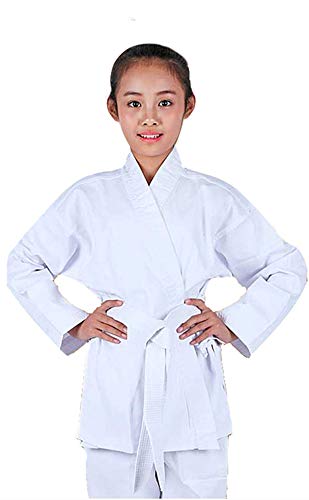
 POZTEV Karate Uniform for Kids & Adults
- Our karate gi is crafted from Premium Cotton-Poly…
- LIGHTWEIGHT WITH 360° MOBILITY: Our lightweight student karate…
- Our martial arts training uniforms undergo meticulous sewing…


As an Amazon Associate we earn from qualifying purchases at no extra cost to you.
At a Glance: Kids’ Karate Gis Compared
| Gi | Best for | Reported specs | Limits |
|---|---|---|---|
| Hayashi Heian | Beginners, wide size range | Light polyester-cotton blend, elastic waistband with hidden drawstring, sizes 110 to 160, belt included; not WKF approved | Not for approved competition |
| Bytomic Red Label | Budget cotton for trainees | 7 oz 100% cotton, European cut with a wrap-around design, sizes 100 to 170 cm; not WKF approved | Cotton can shrink and wrinkle |
| Bytomic Ronin | Durable club training | 8.5 oz polyester-cotton blend, seven rows of stitching, sizes 100 to 160 | Not WKF approved |
| Adidas Master Kumite | Young competitors and beginners | 45 percent polyester, 55 percent cotton, elastic waist; Adidas is on the WKF approved brand list | Less traditional feel; check the specific model’s approval before events |
| Hayashi Premium Kumite | Kumite competitors | Very lightweight polyester, slightly relaxed cut, sizes 150 and 160, WKF approved | Larger sizes only; premium tier |
| Hayashi Katamori | Kata competitors | 13 oz pre-washed cotton, body-optimised cut, sizes 150 to 160, WKF approved, shrinkage about 2 to 3 percent per the retailer | Heavy and warm; premium tier |
| Tokaido (Shoshin student, Kata Master) | Traditional or high-level competitors | Student line is cheaper; the Kata Master is described as 14 oz heavyweight with a Japanese cut | Slim fit; heavy gi is demanding for young children |
Fabric Weight: The Biggest Decision
Gi fabric is measured in ounces per square yard. Reviewers broadly agree that 6 to 8 ounce gis are ideal for beginners, kids and warm dojos, because they are lighter, dry faster and are easier to move in. Heavy gis, around 12 to 14 ounces, are mainly for competition, particularly kata, where the stiff fabric produces a crisp snap and holds its shape. For a child, a heavy gi can feel like carrying a wet towel. Mid-weight blends in the 8 to 10 ounce range give a compromise for children who train several times a week.
- Light (6 to 8 oz): Comfortable, cheap, easy to wash. Bytomic Red Label sits at 7 oz.
- Mid (8 to 10 oz): Bytomic Ronin at 8.5 oz is an example. Better durability for frequent classes.
- Heavy (12 to 14 oz): Hayashi Katamori at 13 oz and Tokaido Kata Master at 14 oz. For serious kata work.
Cotton, Blend or Polyester?
Pure cotton breathes well and feels traditional, but it can shrink and wrinkle. Hayashi’s Katamori is pre-washed, and the retailer reports shrinkage of only about 2 to 3 percent. Polyester-cotton blends, such as the Hayashi Heian, Bytomic Ronin and Adidas Master Kumite, tend to hold their shape, wash easily and dry quickly. Very light polyester kumite gis, like Hayashi’s Premium Kumite, are designed for freedom of movement in sparring rather than for kata.
The Main Contenders in Detail
Hayashi
Hayashi appears in several categories. The Heian is the entry model, with a light polyester-cotton blend, an elastic waistband with a hidden drawstring and a free belt, in sizes 110 to 160. It is not WKF approved, which does not matter for club training. The Katamori and Premium Kumite are WKF-approved models for competitors in sizes 150 to 160, so they suit teenagers more than young children.
Bytomic
Bytomic offers two entry-level options in the sources. The Red Label is a 7 oz 100 percent cotton gi with a European cut and wrap-around design in sizes 100 to 170 cm. The Ronin is an 8.5 oz polyester-cotton blend with seven rows of stitching for durability. These are budget friendly and wide in sizing, which suits small children who often fall between ordinary sizes.
Adidas
Adidas is often called the most accessible brand for beginners. The Master Kumite is a 45 percent polyester, 55 percent cotton blend with an elastic waist, and Adidas appears on the WKF approved brand list. Traditionalists may prefer cotton, but many young karateka find the blend comfortable. Because approval can be model-specific, read the event’s rules before assuming a particular gi is allowed.
Tokaido
Tokaido is highly rated for competition and traditional quality. One review calls its Kata Master a 14 oz heavyweight with a Japanese cut, and the brand also sells cheaper student gis such as the Shoshin. Tokaido’s cut is slim, so check sizing carefully for growing children. Premium traditional gis from Tokaido, Shureido and Seishin sit in a high price tier, which is hard to justify for a child who will outgrow the gi within a year.
Other budget names
Roundups mention budget options such as Namazu, Hawk Sports and Poztev for children. Quality varies, so look at stitching, collar thickness and the quality of the belt included.
Sizing and Fit Notes
- Use height, not age. Gi sizes are usually labelled in centimetres (for example 110, 120 or 150). Pick the size that matches the child’s height, then check the maker’s chart.
- Sleeve length. Sleeves should reach the wrist or just above it. Longer sleeves can be rolled but may get in the way during drills.
- Trouser length. Trousers should reach the ankle or just above it. Cotton gis may shrink by a few percent on the first wash, so a slight allowance is sensible.
- Jacket length. The jacket should cover the hips. Short jackets ride up during kicks.
- Waist. Elastic or drawstring waistbands are helpful for small children who cannot always tie a knot on their own.
- Growing room. A small allowance is fine, but a gi that is far too large makes kata and kumite harder and raises the risk of tripping.
The belt is tied in a flat knot, and the club will often show new students how to do it. Most entry-level gis include a white belt, and the belt colour changes as the student grades.
Care Notes
- Follow the care label. Most gis wash well in cold or warm water and should be hung to dry.
- Avoid tumble drying cotton gis on high heat, which can cause extra shrinkage.
- Wash after every few classes, particularly for children who sweat heavily or have sensitive skin. If a child develops a rash or irritation, speak to a doctor or pharmacist.
- Wash new gis separately at first, as dye or finishing agents may transfer to other clothes.
- Turn the jacket inside out when ironing, or avoid ironing altogether on blends.
Budget Tiers and Trade-offs
- Budget: Bytomic Red Label, Hayashi Heian and similar entry gis. Light and affordable, ideal for a first year.
- Mid-range: Bytomic Ronin, Adidas Master Kumite and Tokaido’s student line. More durable, with better stitching and shape.
- Premium: Hayashi Katamori, Hayashi Premium Kumite and Tokaido Kata Master. Competition-oriented, best for committed young competitors.
Pick X If… Decision Table
| Pick this | If your child |
|---|---|
| Hayashi Heian | Is a beginner who needs an easy waist and a wide size range |
| Bytomic Red Label | Trains in a warm dojo and you want light cotton at a low cost |
| Bytomic Ronin | Trains often and needs extra stitching durability |
| Adidas Master Kumite | Wants a blend gi from a well-known brand that is on the WKF list |
| Hayashi Premium Kumite | Competes in kumite and fits size 150 or 160 |
| Hayashi Katamori | Competes in kata and needs an approved uniform |
| Tokaido Shoshin or Kata Master | Trains in a traditional style or competes at a high level |
Alternatives Worth Considering
- Second-hand club gis. Many clubs have swap boxes. Look for sound stitching and no fraying.
- Club-supplied uniforms. Some schools require a particular gi with the club badge. Ask before buying.
- Judo or taekwondo uniforms. They are not interchangeable with karate gis. Judo jackets are heavier and cut differently, and taekwondo uniforms are lighter with a different closure.
Frequently Asked Questions
What weight should a child’s karate gi be?
Reviewers suggest 6 to 8 ounces for beginners, children and hot dojos. Heavier gis, at 12 to 14 ounces, are mainly for competitive kata. A mid-weight blend is a compromise for frequent training.
Does my child need a WKF-approved gi?
Only if they compete in events that require it. Club training does not need one. Approval is model-specific, so read the event’s rules and the product listing.
How much room should I leave for growth?
A small allowance is enough. Choose a size where the sleeves and trousers reach the wrist and ankle, and remember that cotton may shrink slightly after washing. Too large a gi is a safety and performance concern.
Is cotton or a blend better?
Cotton feels traditional and breathes well but can shrink and crease. A polyester-cotton blend is easier to care for and holds its shape. For a child who grows quickly, a blend is often the more practical choice.
Does the gi come with a belt?
Many entry-level models, including the Hayashi Heian, include a belt. Confirm what is in the box, because premium competition gis may not include one.
How often should the gi be washed?
Wash it after every few sessions, and after each session if it is sweaty. Follow the care label and hang the gi to dry, since heat can shrink cotton and shorten the life of blends.



Write Your Review
No reviews yet. Be the first to share your experience!