

Key takeaways
- Match dojo mat thickness to your karate training at home, from half inch tiles for standing kata to extra thick mats for falls, with five worked examples.
A spare room, a garage corner, or a cleared patch of basement can become a home dojo, but the floor decides how much of your training can move there. Bare concrete and hardwood are unforgiving underfoot, hard on joints during stance work, and risky the moment a drill involves a fall. Interlocking foam tiles solve most of that, yet they come in several thicknesses, and the right one depends on what you practice.
This guide walks through the thickness ladder in plain terms, then shows five tile sets sold on Amazon as worked examples, from a half inch mat for standing kata up to an extra thick mat built for takedown work. Falling and throwing practice belongs in supervised training under a qualified instructor, and no mat removes the need for that guidance.
As an Amazon Associate, we earn from qualifying purchases.
Quick answer
Match thickness to the hardest thing you plan to do on the mat. Half inch tiles suit standing kata, forms, and footwork. Three quarter inch tiles add comfort for longer sessions and light floor work. One inch tiles handle regular drilling with some groundwork. For throws and falls, go thicker still and train under a qualified instructor.
How to choose
Begin with the activity, not the product name. Karate training at home usually falls into a few bands, and each band points to a thickness range.
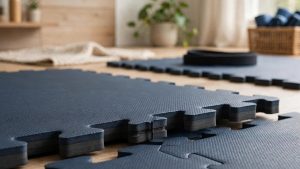
Standing work comes first. Kata, kihon lines, stance transitions, and shadow sparring keep both feet near the floor, so the mat mainly needs grip, a little give under the ball of the foot, and protection for the floor beneath. Half inch tiles cover this band well. They feel firm and stable during pivoting, which matters when you turn in zenkutsu dachi or shift through kokutsu dachi, and they keep a low profile in a multi use room.
Longer sessions and light floor work sit in the middle band. If your practice adds stretching, core work, kneeling drills, or slow breakfall rolls taught at your dojo, three quarter inch tiles give more cushion under knees, hips, and elbows without feeling spongy underfoot. This is the comfort band for mixed training days.
Regular drilling with groundwork pushes you to one inch. Partner drills, clinch entries, and repeated low falls from kneeling height ask more of a mat, and one inch of high density foam is the common home answer. A tatami style surface also helps here, giving bare feet a consistent grip.
Throws and standing falls are the top band. A body landing from height needs the deepest cushion you can fit, which is where inch and a half tiles earn their place. Treat this band as instructor led territory: learn falls and throws under supervision first, and only bring them home once your instructor agrees your technique is ready. A thick mat cushions a floor, but it never promises to prevent injury.
Beyond thickness, check four things. Density matters as much as depth, so look for high density foam that springs back rather than packing flat. Tile size shapes the layout, and the common 24 by 24 inch format makes planning easy at four square feet per tile. Borders finish the edges and stop outer tiles from creeping. Finally, before any drill session, walk the surface and press along every seam, checking that tiles sit flat with no gaps.
BalanceFrom Puzzle Exercise Mat, 1/2 Inch Thick, 144 Square Feet
This is the standing work example. At a half inch thick, the BalanceFrom tiles give a firm, stable platform for kata and forms, where a softer surface can make pivots feel vague. The set is generous: 36 tiles, each 24 by 24 inches, covering 144 square feet once locked together, which is enough for a full garage bay or a large spare room with room to move through long stances.
Because the foam is thin, this set suits homes where the mat goes down for practice and comes up again afterward. Use it for kata, kihon, and footwork drills. If your training adds kneeling work or any kind of falling, treat this as the floor you outgrow rather than the floor you land on, and look further up this list.
Specs:
– Thickness: 1/2 inch
– Tile size: 24 x 24 inches
– Tiles included: 36
– Coverage: 144 square feet
– Material: EVA foam
BalanceFrom Puzzle Exercise Mat, 3/4 Inch Thick, 24 Square Feet
The three quarter inch BalanceFrom set is the middle band example, aimed at smaller spaces and longer sessions. Six tiles cover 24 square feet, a footprint that fits a bedroom corner or a narrow training strip, and the pack includes 12 end borders for a finished edge. The listing describes high density EVA foam that cushions spine, hips, knees, and elbows on hard floors, which is exactly the comfort this thickness band is for.
Choose this size when home practice mixes standing kata with stretching, mobility work, and slow floor drills. It is also a sensible first mat for a child training at home under supervision, since the smaller area keeps practice in one defined zone. If the space grows later, plan a fresh layout rather than mixing tile lines, because tiles from different makers rarely lock together.
Specs:
– Thickness: 3/4 inch
– Tile size: 24 inches
– Tiles included: 6, with 12 end borders
– Coverage: 24 square feet
– Material: high density EVA foam
Fitvids Puzzle Exercise Gym Flooring Mat, 1 Inch Thick, 72 Square Feet
At one inch thick, the Fitvids set steps into the regular drilling band. The pack holds 18 tiles at 24 by 24 inches each, covering 72 square feet, with 36 end borders included. The listing notes double sided non-slip surfaces, so a tile can go down either way, and describes the foam as comfortably cushioning the spine, hips, knees, and elbows on hard floors.
For a home karate space, this is the thickness to pick when practice includes partner drilling, pad work with movement, and the occasional kneeling fall your instructor has taught you. Seventy two square feet gives two people room to work without crowding the edges. Keep falling work low: technique first, height later, and only as your dojo teaches it.
Specs:
– Thickness: 1 inch
– Tile size: 24 x 24 inches
– Tiles included: 18, with 36 end borders
– Coverage: 72 square feet
– Material: EVA foam, double sided non-slip surfaces
We Sell Mats Martial Arts EVA Foam Exercise Mat, Tatami Pattern, 1 Inch Thick
We Sell Mats builds this tile for martial arts use, and the tatami pattern surface is the detail that sets it apart from smooth gym tiles. Tiles measure 24 by 24 inches at one inch thick, and each tile comes with two border pieces, a straight edge and a corner edge, for a clean outline. The maker positions these tiles for home gyms and martial arts training, with a textured surface meant to give bare feet steady grip during forms and drilling.
Pick the tatami surface if your kata involves fast direction changes and you want a floor that feels closer to a dojo floor. The listing notes the tiles are for indoor use and not recommended over carpet, so plan on a hard, flat base. As with the other one inch option here, this thickness suits drilling and low falls taught under supervision, not high throws.
Specs:
– Thickness: 1 inch
– Tile size: 24 x 24 inches
– Surface: tatami pattern
– Borders: 2 border pieces per tile
– Material: EVA foam
– Use: indoor use, not recommended over carpet
Meister X-Thick 1.5 Inch Interlocking EVA Foam Mats, 16 Tiles
The Meister tiles top the ladder at an inch and a half of closed-cell EVA foam, the deepest cushion in this guide. The listing describes them as built for wrestling, takedowns, and gymnastics, and the 16 tile pack in black covers 64 square feet with 24 inch tiles. That positioning tells you the job: this is the mat for homes where falling practice is an instructor approved part of training.
Thickness this generous changes how the floor feels underfoot. Standing kata on very soft foam can feel less stable, so many home dojos lay a mat like this in one zone for groundwork and falling drills while keeping a firmer area for forms. Either way, throws and falls are learned under a qualified instructor; the mat supports that training rather than replacing it.
Specs:
– Thickness: 1.5 inches
– Tile size: 24 inches (2 ft x 2 ft)
– Tiles included: 16
– Coverage: 64 square feet
– Material: closed-cell EVA foam
Who should skip
Skip thin tiles if your home training already includes throws or standing falls; a half inch mat under a falling body is the wrong tool, full stop. Skip puzzle tiles if your floor is deep carpet, since tiles shift and seams open on a soft base. Skip the extra thick option if nearly all your practice is standing kata, because the softer surface can dull the stable feeling you want under pivoting feet. And skip any mat as a shortcut around instruction: if nobody qualified has taught you to fall, the correct purchase is more classes, not more foam.
FAQ
How thick should a mat be for kata only?
Half inch tiles are enough for kata, forms, and footwork, because your feet stay near the floor and stability matters more than deep cushion. If sessions run long or add stretching and kneeling drills, three quarter inch tiles feel kinder under knees and elbows while staying firm underfoot.
Can I practice throws on one inch tiles?
Keep throws off one inch tiles unless your instructor has set the drill and approved the setup. Standing falls land with far more force than kneeling drills. The thicker mats in this guide, at an inch and a half, are the ones positioned for takedown style work, and even then the training belongs under supervision.
How many tiles do I need for a home dojo?
Work from tile size. A 24 by 24 inch tile covers four square feet, so a 10 by 12 foot space needs about 30 tiles before borders. The packs above range from 24 to 144 square feet, so measure the room first, then match the pack to the floor you use for training.
How do I keep tiles from shifting during practice?
Lay tiles on a hard, flat floor, press every seam home, and finish the edges with the border pieces in the pack. Before each session, walk the surface and check that tiles sit flat with no gaps or lifted corners, and relay any tile that has crept out of line.
Final verdict
Thickness is a training decision before it is a shopping one. Standing kata and forms sit happily on half inch tiles, mixed sessions feel better at three quarters, regular drilling belongs on one inch, and falls call for the inch and a half class plus an instructor guiding the work. The BalanceFrom sets cover the firm end of the range, the Fitvids and We Sell Mats tiles cover the one inch middle in smooth and tatami finishes, and the Meister mat handles the deep end. Measure your space, name your hardest drill honestly, and buy the thickness that drill requires.
More from Amazon
Programs that pair well with the guide above. Offers and eligibility are set by Amazon and may change.
Free shipping on eligible items, Prime Video and more. Eligible new members can start with a free trial.
Start a Prime free trialA Prime membership for ages 18-24 with a trial period. Eligibility is set by Amazon.
See Prime for Young AdultsAudiobooks and podcasts to listen to on the go. Eligible new members can start with a free trial.
Try Audible freeAd-free music streaming. Eligible new subscribers can start with a free trial.
Try Music Unlimited freeAs an Amazon Associate we earn from qualifying purchases.
Write Your Review
No reviews yet. Be the first to share your experience!